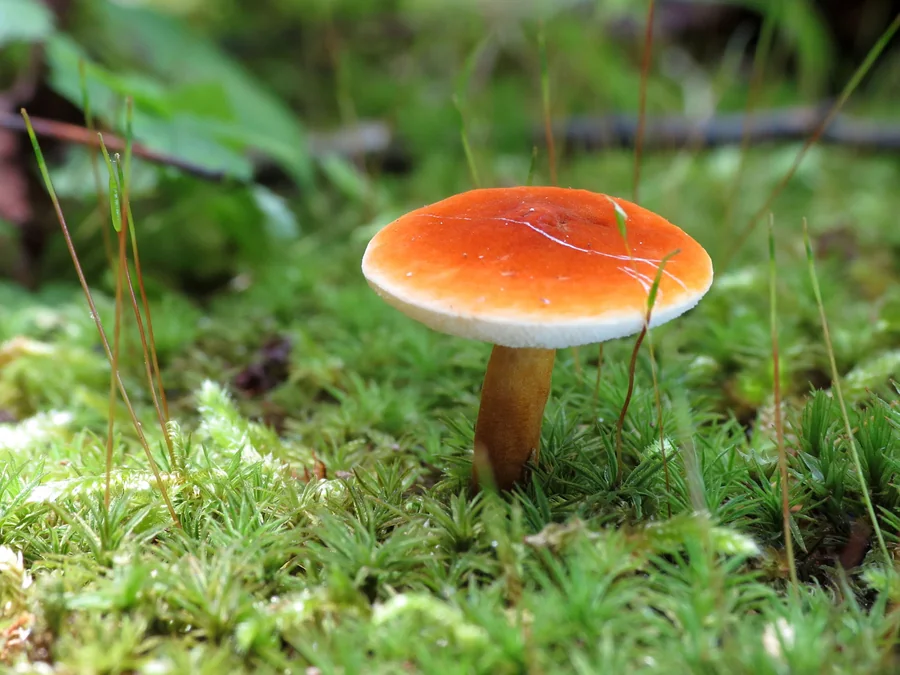
Chestnut bolete
Gyroporus castaneus · 栗色圆孔牛肝菌
Occasional圆孔牛肝菌科🔥 Edible With Preparation
Sources report it requires expert processing before it can be eaten; cases of poisoning from improper handling have been recorded.
The same species can be described differently across regions and stages of maturity, and countless look-alike species cannot be told apart by eye. Never use the information on this page to judge whether a real mushroom is safe to eat.
How to Tell
- Cap chestnut brown, hairy surface
- Stem the same color, hollow and brittle
- Pores white, turning pale yellow; grows in hardwood forests
ID notes are compiled by AI from public sources, not reviewed by a mycologist, for learning only — never a basis for foraging.
Basics
- Family
- 圆孔牛肝菌科
- Hymenium
- Pores
- Grows On
- Mycorrhizal
- How Big
- 3–8 cm (cap diameter)
- Encounter Rate
- Occasional
- Habitat
- Sandy oak woodland
Easily Confused With
 Cornflower boleteCap pale yellow, hairy surface
Fun Fact
Its stem hollows out with age and collapses at the lightest squeeze — an unusual trait among boletes.
Open in the guide · filters & photos ›