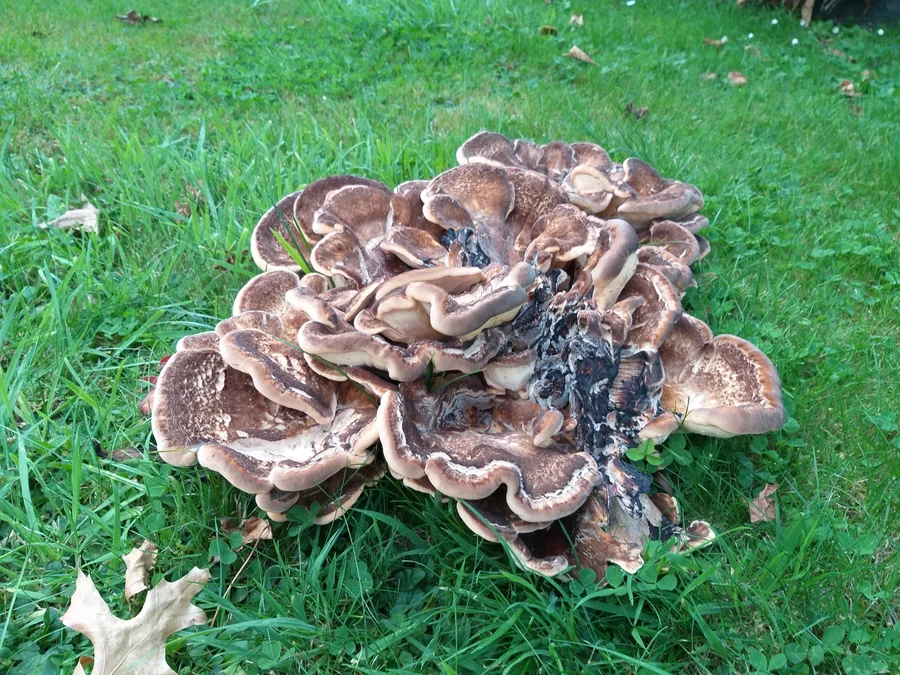
Giant polypore
Meripilus giganteus · 巨盖孔菌
Occasional薄孔菌科❓ Inedible
Non-toxic, but woody or intensely bitter in texture — not eaten as food.
The same species can be described differently across regions and stages of maturity, and countless look-alike species cannot be told apart by eye. Never use the information on this page to judge whether a real mushroom is safe to eat.
How to Tell
- Many brown fan-shaped caps stacked into a large cluster, up to half a meter across
- Underside white, blackening when pressed
- Grows at the base and roots of hardwoods
ID notes are compiled by AI from public sources, not reviewed by a mycologist, for learning only — never a basis for foraging.
Basics
- Family
- 薄孔菌科
- Hymenium
- Pores
- Grows On
- Wood
- How Big
- 20–60 cm (overall size)
- Encounter Rate
- Occasional
- Habitat
- Base of beech and other hardwoods
Easily Confused With
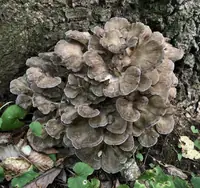 MaitakeMany grayish brown fan-shaped lobes stack into a large cluster, flower-like
Fun Fact
A single cluster can grow up to a meter wide. Bruise the pore surface and it turns black within minutes — a reliable way to tell it from maitake.