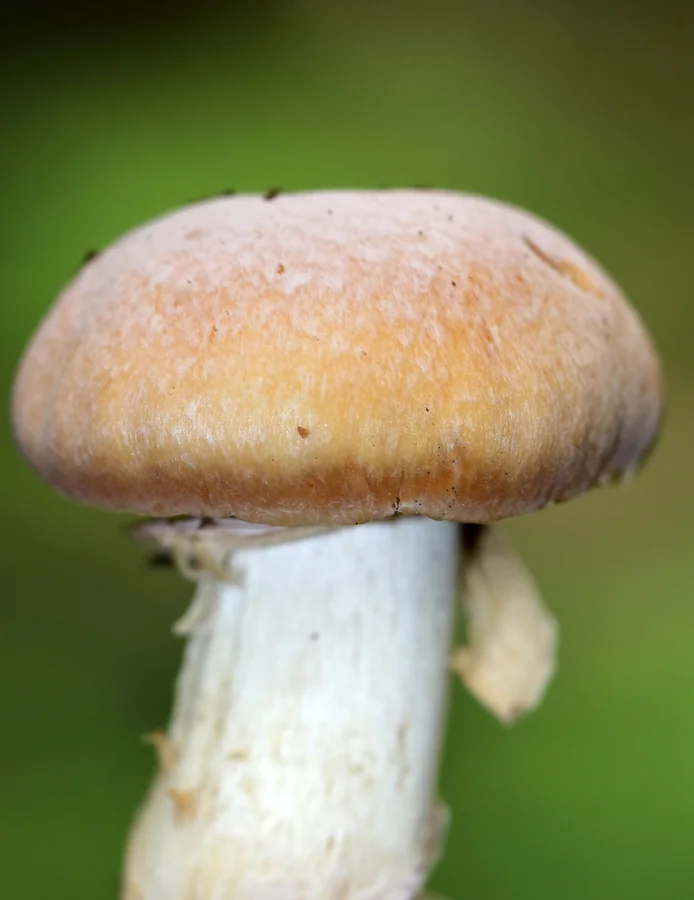
Gypsy mushroom
Cortinarius caperatus · 皱盖丝膜菌
Occasional丝膜菌科🔥 Edible With Preparation
Sources report it requires expert processing before it can be eaten; cases of poisoning from improper handling have been recorded.
The same species can be described differently across regions and stages of maturity, and countless look-alike species cannot be told apart by eye. Never use the information on this page to judge whether a real mushroom is safe to eat.
How to Tell
- Cap ochre-yellow, coated in a frost-like powder
- Stem with a membranous ring; gills pale brown, aging to rusty brown
- Grows in mossy conifer forests and among bilberry shrubs
ID notes are compiled by AI from public sources, not reviewed by a mycologist, for learning only — never a basis for foraging.
Basics
- Family
- 丝膜菌科
- Hymenium
- Gills
- Grows On
- Mycorrhizal
- How Big
- 5–12 cm (cap diameter)
- Encounter Rate
- Occasional
- Habitat
- Conifer woods, among bilberry
Easily Confused With
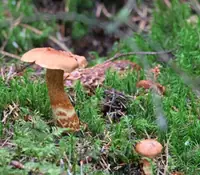 Deadly webcapGypsy mushroom has a frosted-looking cap and a membranous ring; deadly webcap is red-brown and conical, with only a cobweb-like trace.
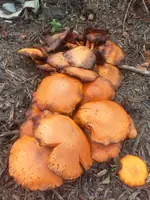 Spectacular rustgillGypsy mushroom has a frosted cap and pale brown gills; spectacular rustgill is orange-yellow with rusty-brown gills and a bitter taste.
Fun Fact
Most Cortinarius species are inedible or outright deadly, but this is one of the few with a history of being eaten; Nordic foragers recognize it by the wrinkled cap and the white ring.