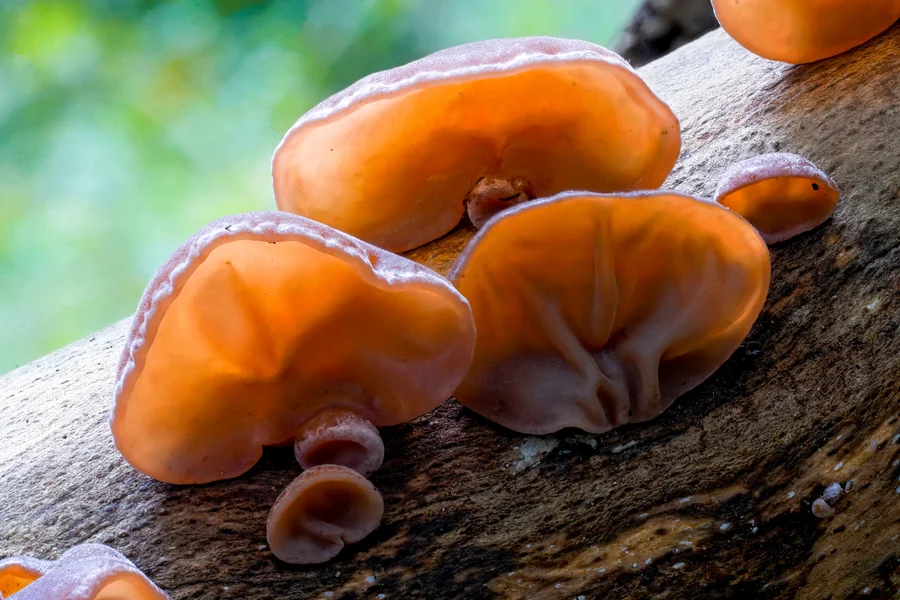
Jelly ear
Auricularia auricula-judae · 犹太耳
Common木耳科🍽 Reported Edible (Wild)
Reference sources describe this as an edible wild fungus. This guide provides no basis whatsoever for foraging or consumption.
The same species can be described differently across regions and stages of maturity, and countless look-alike species cannot be told apart by eye. Never use the information on this page to judge whether a real mushroom is safe to eat.
How to Tell
- Ear-shaped and gelatinous, reddish brown, finely hairy surface
- Translucent and rubbery when wet
- Grows on dead branches of elder and other hardwoods
ID notes are compiled by AI from public sources, not reviewed by a mycologist, for learning only — never a basis for foraging.
Basics
- Family
- 木耳科
- Hymenium
- Smooth
- Grows On
- Wood
- How Big
- 3–10 cm (overall size)
- Encounter Rate
- Common
- Habitat
- Dead branches of elder and other hardwoods
Easily Confused With
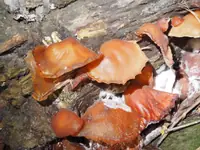 Black wood earEar-shaped and gelatinous, dark brown to blackish brown; translucent and rubbery when wet
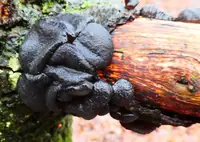 Black witch's butterBlack, gelatinous mass, finely warted on the surface
Fun Fact
This European species grows mainly on elder trees; the black wood ear cultivated in China is a separate species, though the two look nearly identical.
Open in the guide · filters & photos ›