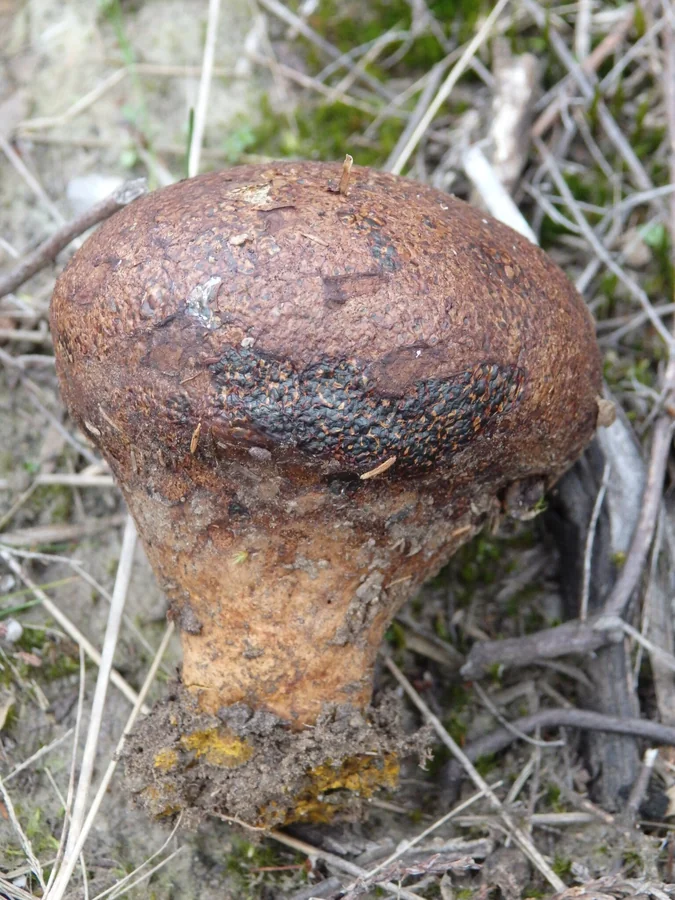
Dyeball
Pisolithus arhizus · 豆马勃
Occasional硬皮马勃科❓ Inedible
Non-toxic, but woody or intensely bitter in texture — not eaten as food.
The same species can be described differently across regions and stages of maturity, and countless look-alike species cannot be told apart by eye. Never use the information on this page to judge whether a real mushroom is safe to eat.
How to Tell
- Brown, irregularly shaped mass, with a root-like pseudostem
- Interior packed with many pea-like packets when cut
- Grows on poor sandy soil and mine spoil
ID notes are compiled by AI from public sources, not reviewed by a mycologist, for learning only — never a basis for foraging.
Basics
- Family
- 硬皮马勃科
- Hymenium
- Gleba
- Grows On
- Soil
- How Big
- 4–12 cm (overall size)
- Encounter Rate
- Occasional
- Habitat
- Poor sandy soil and road embankments
Easily Confused With
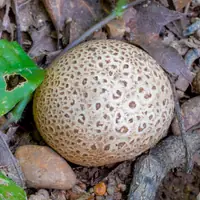 Common earthballDyeball has a root-like stem and cuts open to show pea-like chambers; earthball has no stem and a uniformly purple-black interior.
Fun Fact
Cut it open and it looks like a mosaic, packed with countless tiny spore chambers; it can dye wool everything from golden yellow to deep brown, earning it the name 'dyeball.'
Open in the guide · filters & photos ›