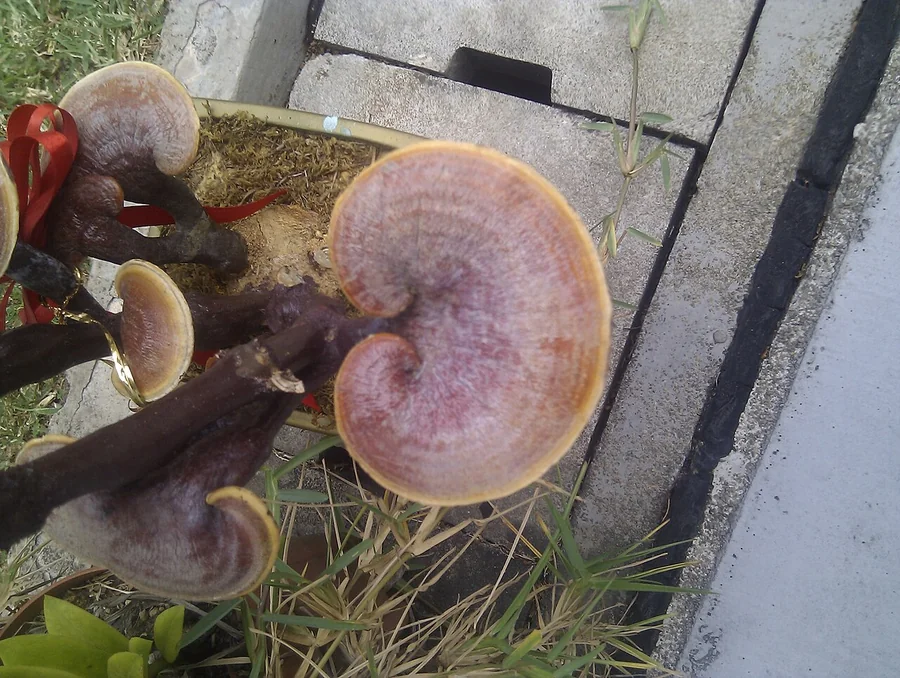
Reishi
Ganoderma lingzhi · 灵芝
Occasional灵芝科💊 Medicinal
Traditionally used as a medicinal ingredient, not as food.
The same species can be described differently across regions and stages of maturity, and countless look-alike species cannot be told apart by eye. Never use the information on this page to judge whether a real mushroom is safe to eat.
How to Tell
- Cap kidney- or fan-shaped, reddish brown with a lacquered sheen
- Marked with concentric rings; margin often has a pale yellow-white growth band
- Stem lateral, equally glossy; grows at the base or roots of hardwoods
ID notes are compiled by AI from public sources, not reviewed by a mycologist, for learning only — never a basis for foraging.
Basics
- Family
- 灵芝科
- Hymenium
- Pores
- Grows On
- Wood
- How Big
- 5–20 cm (overall size)
- Encounter Rate
- Occasional
- Habitat
- Oak, chestnut and other hardwood stumps
Easily Confused With
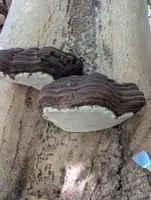 Artist's conkFlat and semicircular, upper surface grayish brown with concentric zones
Fun Fact
The red reishi used in Chinese tradition wasn't formally split from Europe's Ganoderma lucidum until 2012, when it was named Ganoderma lingzhi.
Open in the guide · filters & photos ›