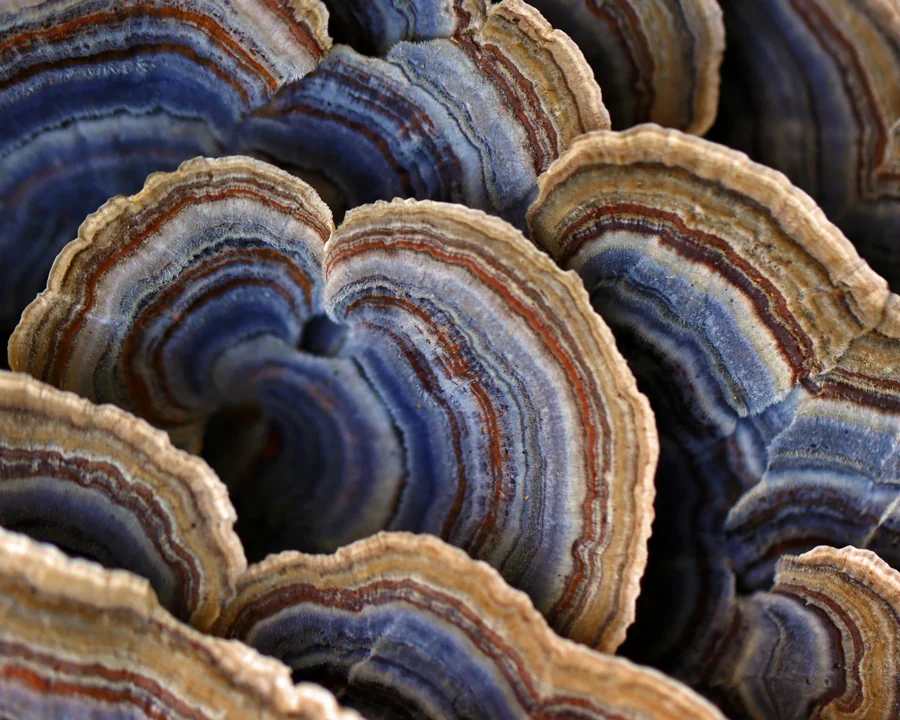
Turkey tail
Trametes versicolor · 云芝
Common多孔菌科💊 Medicinal
Traditionally used as a medicinal ingredient, not as food.
The same species can be described differently across regions and stages of maturity, and countless look-alike species cannot be told apart by eye. Never use the information on this page to judge whether a real mushroom is safe to eat.
How to Tell
- Thin, tough, and fan-shaped, with multicolored concentric bands like a turkey's tail
- Upper surface finely velvety; underside white with fine pores
- Grows in dense overlapping tiers on dead wood, visible year-round
ID notes are compiled by AI from public sources, not reviewed by a mycologist, for learning only — never a basis for foraging.
Basics
- Family
- 多孔菌科
- Hymenium
- Pores
- Grows On
- Wood
- How Big
- 2–8 cm (overall size)
- Encounter Rate
- Common
- Habitat
- Dead wood of many hardwoods
Easily Confused With
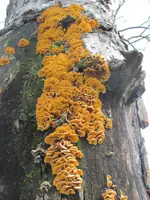 Hairy curtain crustOrange-yellow and thin, upper surface hairy
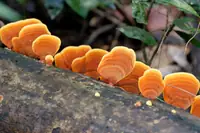 False turkey tailFan-shaped and thin, orange-brown with concentric zones, resembling turkey tail
Fun Fact
To tell it apart from its lookalike, the hairy curtain crust, flip it over: turkey tail has a fine, porous underside, while the impostor's back is smooth.