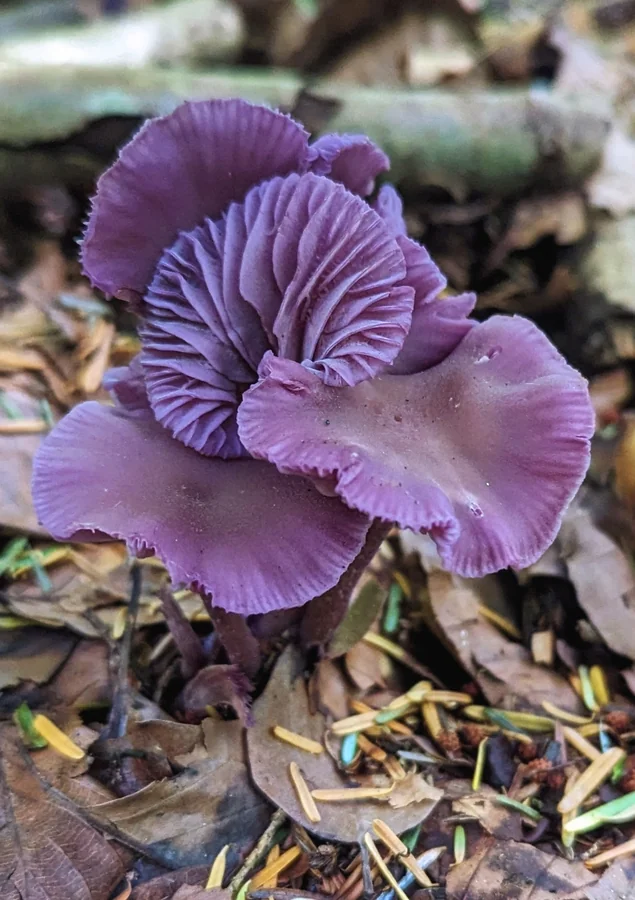
Amethyst deceiver
Laccaria amethystina · 紫蜡蘑
Occasional轴腹菌科🔥 Edible With Preparation
Sources report it requires expert processing before it can be eaten; cases of poisoning from improper handling have been recorded.
The same species can be described differently across regions and stages of maturity, and countless look-alike species cannot be told apart by eye. Never use the information on this page to judge whether a real mushroom is safe to eat.
How to Tell
- Entirely amethyst purple, fading to grayish white when dry
- Gills thick and widely spaced, also purple
- Stem slender and tough; grows in woodland
ID notes are compiled by AI from public sources, not reviewed by a mycologist, for learning only — never a basis for foraging.
Basics
- Family
- 轴腹菌科
- Hymenium
- Gills
- Grows On
- Mycorrhizal
- How Big
- 2–6 cm (cap diameter)
- Encounter Rate
- Occasional
- Habitat
- Leaf litter in beech and oak woods
Easily Confused With
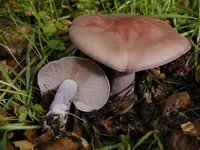 Wood blewitOverall lilac colored, cap fading to brown with age
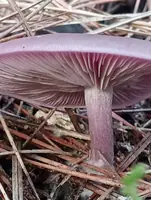 Sordid blewitEntirely pale purple, smaller and paler than wood blewit
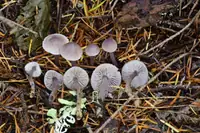 Lilac bonnetAmethyst deceiver has thick, widely spaced gills and a tough stem; lilac bonnet has crowded gills, a hollow brittle stem and a radish smell.
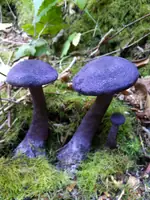 Violet webcapEntirely deep purple, cap with a velvety texture
Fun Fact
The 'deceiver' in its English name refers to how drastically its color shifts: vivid purple when wet, fading to grayish-white when dry, almost like a different species.
Open in the guide · filters & photos ›