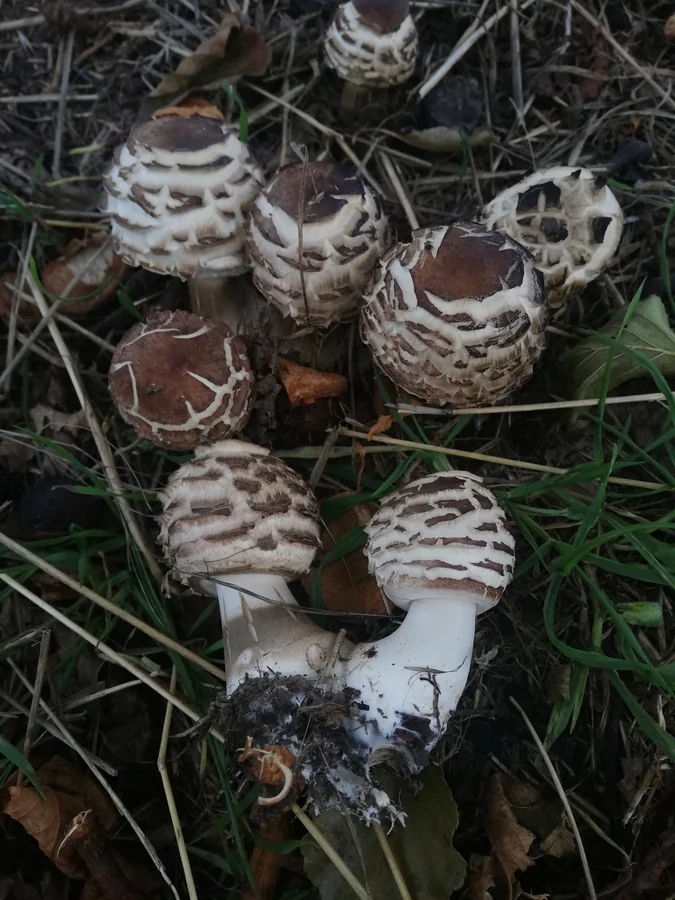
Shaggy parasol
Chlorophyllum rhacodes · 粗鳞大环柄菇
Occasional蘑菇科🔥 Edible With Preparation
Sources report it requires expert processing before it can be eaten; cases of poisoning from improper handling have been recorded.
The same species can be described differently across regions and stages of maturity, and countless look-alike species cannot be told apart by eye. Never use the information on this page to judge whether a real mushroom is safe to eat.
How to Tell
- Cap brown, covered in coarse, upturned scales
- Gills white; flesh turns orange-red when cut
- Stem smooth and unpatterned, with a movable ring
ID notes are compiled by AI from public sources, not reviewed by a mycologist, for learning only — never a basis for foraging.
Basics
- Family
- 蘑菇科
- Hymenium
- Gills
- Grows On
- Leaf Litter
- How Big
- 6–15 cm (cap diameter)
- Encounter Rate
- Occasional
- Habitat
- Conifer edges, compost and gardens
Easily Confused With
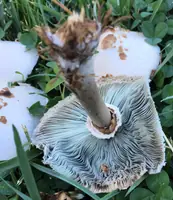 Green-spored parasolShaggy parasol's gills stay white and its flesh turns orange-red when cut; green-spored parasol's gills turn green.
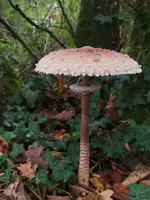 Parasol mushroomCap large and flat, with brown scales arranged in concentric rings
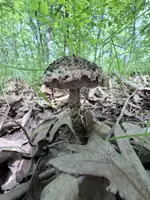 Old man of the woodsShaggy parasol has white gills and a movable ring; the old man of the woods has pores and is grey-black all over.
Fun Fact
Cut flesh turns orange-red, then brown, and the spore print is white — the key pairing with the green-spored parasol, whose print is green; some people still get gastrointestinal reactions after eating it.
More in this family
- Almond mushroom
- Button mushroom
- Common puffball
- Deadly dapperling
- Field mushroom
- Flowerpot parasol
- Giant puffball
- Horse mushroom
- Shaggy ink cap
- Yellow stainer