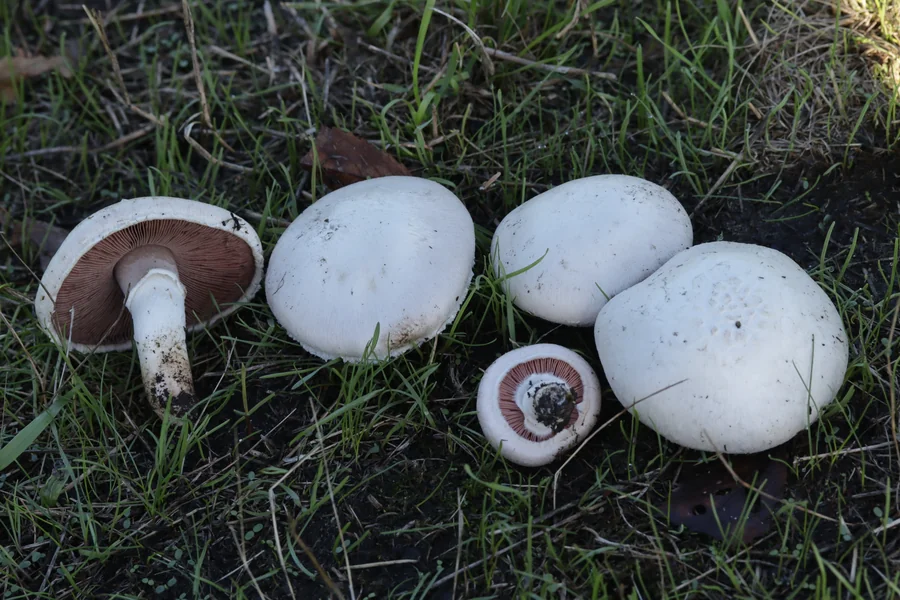
Field mushroom
Agaricus campestris · 四孢蘑菇
Common蘑菇科🍽 Reported Edible (Wild)
Reference sources describe this as an edible wild fungus. This guide provides no basis whatsoever for foraging or consumption.
The same species can be described differently across regions and stages of maturity, and countless look-alike species cannot be told apart by eye. Never use the information on this page to judge whether a real mushroom is safe to eat.
How to Tell
- Cap white; gills pink, darkening to deep brown with age
- Stem with a thin ring; base not swollen and lacks a volva
- Grows in meadows and pastures, with a pleasant smell
ID notes are compiled by AI from public sources, not reviewed by a mycologist, for learning only — never a basis for foraging.
Basics
- Family
- 蘑菇科
- Hymenium
- Gills
- Grows On
- Grassland
- How Big
- 3–10 cm (cap diameter)
- Encounter Rate
- Common
- Habitat
- Pastures and grassland
Easily Confused With
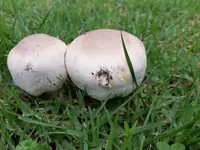 Yellow stainerField mushroom bruises faintly pink; yellow stainer's base turns bright yellow and smells of ink.
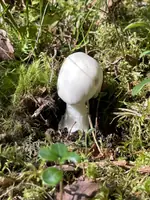 Destroying angelField mushroom's gills turn pink then dark brown, with no volva; destroying angel's gills are pure white and it has a volva.
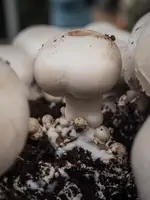 Button mushroomCap rounded, white or brown; gills pink, aging to dark brown
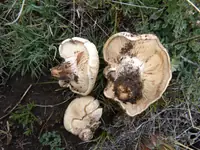 Mongolian tricholomaCap large and white; stem stout and white
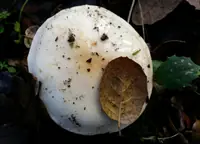 Poison pieField mushroom has a ring and gills that go from pink to dark brown; poison pie has no ring, and its gill edges bead with droplets when moist.
Fun Fact
Pink gills that darken to deep brown with age are a hallmark of the Agaricus genus; if the gills stay pure white, be wary — that could signal an Amanita instead.
More in this family
- Almond mushroom
- Common puffball
- Deadly dapperling
- Flowerpot parasol
- Giant puffball
- Green-spored parasol
- Horse mushroom
- Parasol mushroom
- Shaggy ink cap
- Shaggy parasol