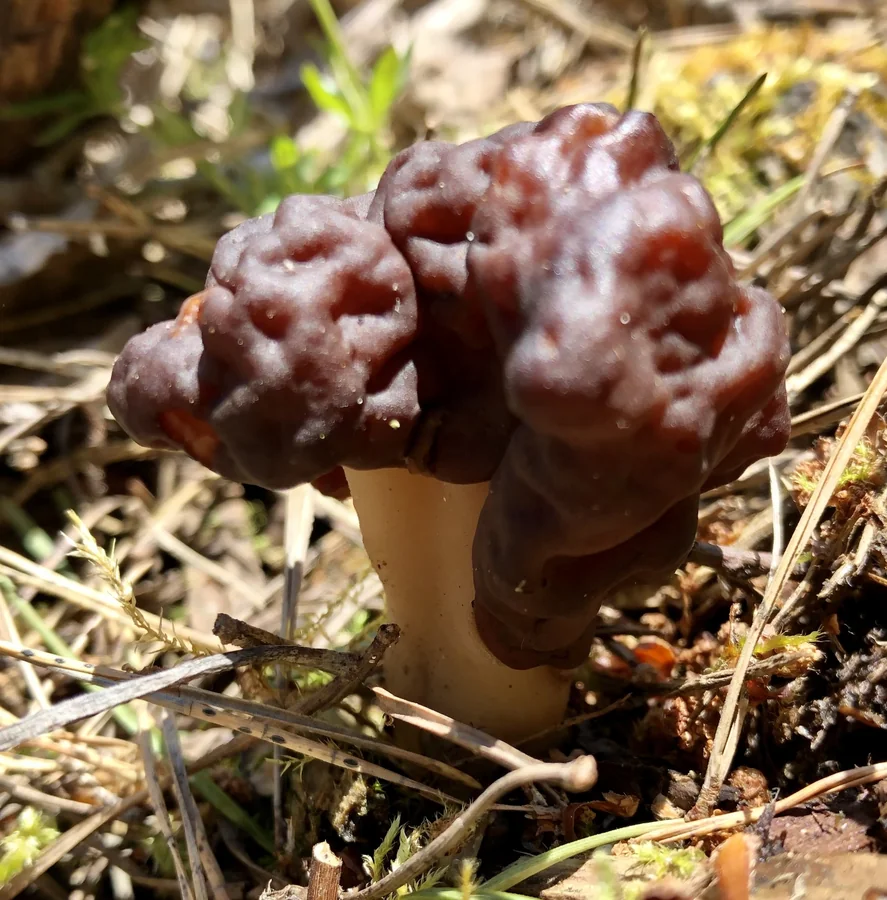
False morel
Gyromitra esculenta · 鹿花菌
Occasional平盘菌科☠️ Deadly Poisonous
Reference sources describe this as highly toxic, with recorded fatalities.
The same species can be described differently across regions and stages of maturity, and countless look-alike species cannot be told apart by eye. Never use the information on this page to judge whether a real mushroom is safe to eat.
How to Tell
- Cap reddish brown, irregularly brain-like and wrinkled, not honeycombed
- Stem short, stout, and white, chambered inside
- Grows in spring on sandy soil in conifer forests
ID notes are compiled by AI from public sources, not reviewed by a mycologist, for learning only — never a basis for foraging.
Basics
- Family
- 平盘菌科
- Hymenium
- Smooth
- Grows On
- Soil
- How Big
- 3–12 cm (overall size)
- Encounter Rate
- Occasional
- Habitat
- Sandy soil in conifer woods, burnt ground
Easily Confused With
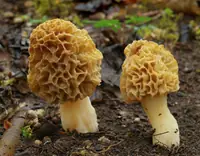 MorelMorel's cap is honeycomb-pitted and hollow in one piece; false morel is brain-like and wrinkled, with chambers inside.
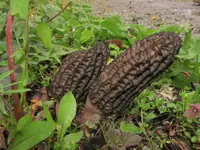 Black morelBlack morel's cap has ladder-like vertical ridges; false morel is irregularly brain-like and wrinkled.
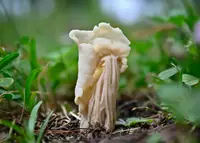 White saddleWhite saddle has a white saddle-shaped cap and a deeply grooved stem; false morel is red-brown and brain-like.
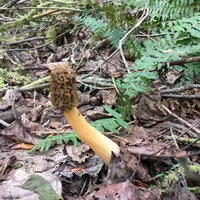 Early morelCap longitudinally wrinkled, attached to the stem only at the top, thimble-like
Fun Fact
It contains gyromitrin, which the body converts into monomethylhydrazine — the same compound used as rocket fuel. Its cap is a solid, brain-like mass of folds, while a true morel's is hollow and honeycombed.
Open in the guide · filters & photos ›