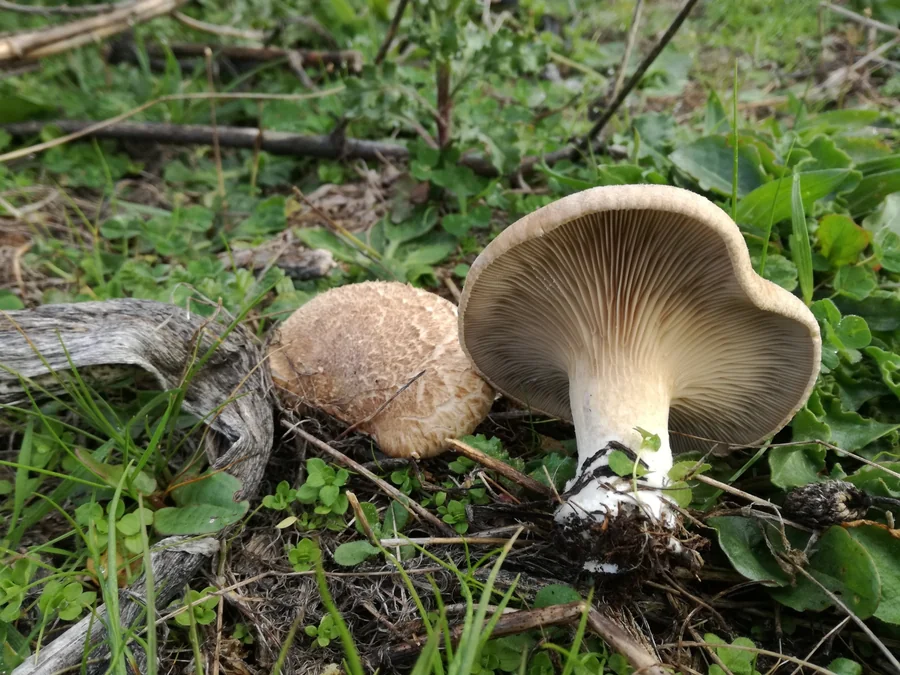
King oyster
Pleurotus eryngii · 杏鲍菇
Common侧耳科🍽 Cultivated Edible
A commercially cultivated edible fungus. Buy wild specimens only through reputable, regulated sources.
The same species can be described differently across regions and stages of maturity, and countless look-alike species cannot be told apart by eye. Never use the information on this page to judge whether a real mushroom is safe to eat.
How to Tell
- Stem thick and white, more conspicuous than the cap
- Cap brown with an inrolled margin; gills run down the stem
- Wild specimens grow at the roots of umbellifer plants
ID notes are compiled by AI from public sources, not reviewed by a mycologist, for learning only — never a basis for foraging.
Basics
- Family
- 侧耳科
- Hymenium
- Gills
- Grows On
- Soil
- How Big
- 4–12 cm (cap diameter)
- Encounter Rate
- Common
- Habitat
- Wild form lives on the roots of eryngo and other umbellifers
Fun Fact
It's one of the few oyster mushrooms that partners with an herb instead of a tree — in the wild it grows only on the dead roots of eryngo (sea holly).