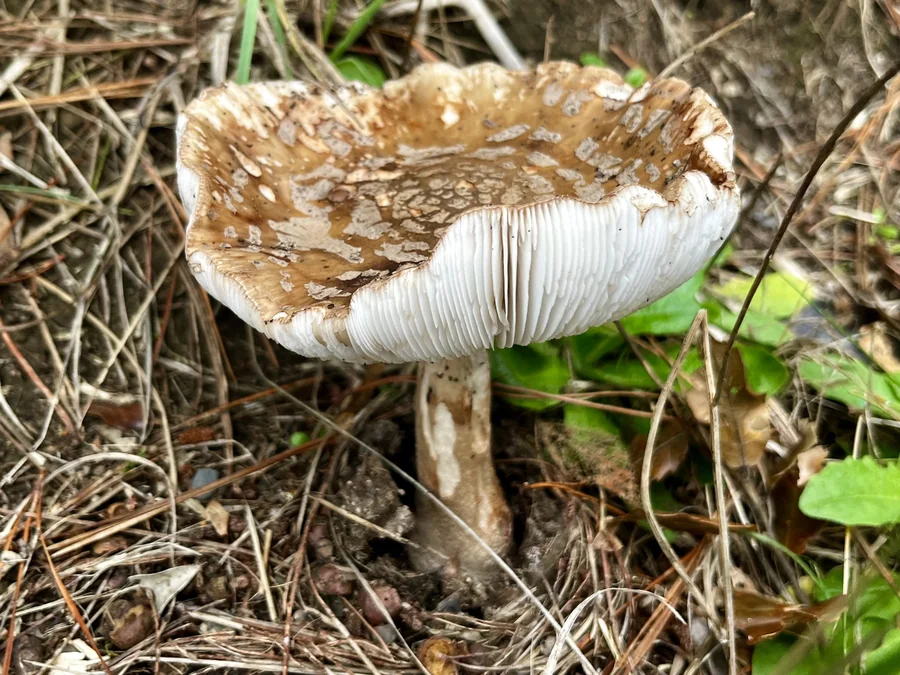
The blusher
Amanita rubescens · 赭盖鹅膏
Common鹅膏科🔥 Edible With Preparation
Sources report it requires expert processing before it can be eaten; cases of poisoning from improper handling have been recorded.
The same species can be described differently across regions and stages of maturity, and countless look-alike species cannot be told apart by eye. Never use the information on this page to judge whether a real mushroom is safe to eat.
How to Tell
- Cap reddish brown, with grayish white wart-like scales
- Bruised or insect-damaged spots slowly turn red, the source of its name
- Stem has a ring; base swollen but volva indistinct
ID notes are compiled by AI from public sources, not reviewed by a mycologist, for learning only — never a basis for foraging.
Basics
- Family
- 鹅膏科
- Hymenium
- Gills
- Grows On
- Mycorrhizal
- How Big
- 5–15 cm (cap diameter)
- Encounter Rate
- Common
- Habitat
- Ground in broadleaf and conifer woods
Easily Confused With
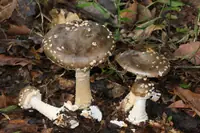 Panther capThe blusher reddens when damaged and lacks the rim-like volva band at the base; panther cap does not change colour.
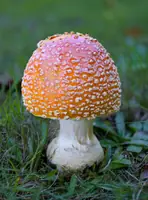 Fly agaricThe blusher has a brownish-red cap that reddens when damaged; its warts rub off easily and are not neatly arranged.
Fun Fact
Spots nibbled by insects or bruised by a touch slowly flush wine-red, which is how it got its name; raw specimens contain a blood-cell-destroying toxin, and records say it must be cooked thoroughly.
More in this family
- American Caesar
- Caesar's mushroom
- Death cap
- Destroying angel
- East Asian death cap
- East Asian yellow death cap
- False death cap
- Grisette
- Half-dyed slender caesar
- Smith's amanita