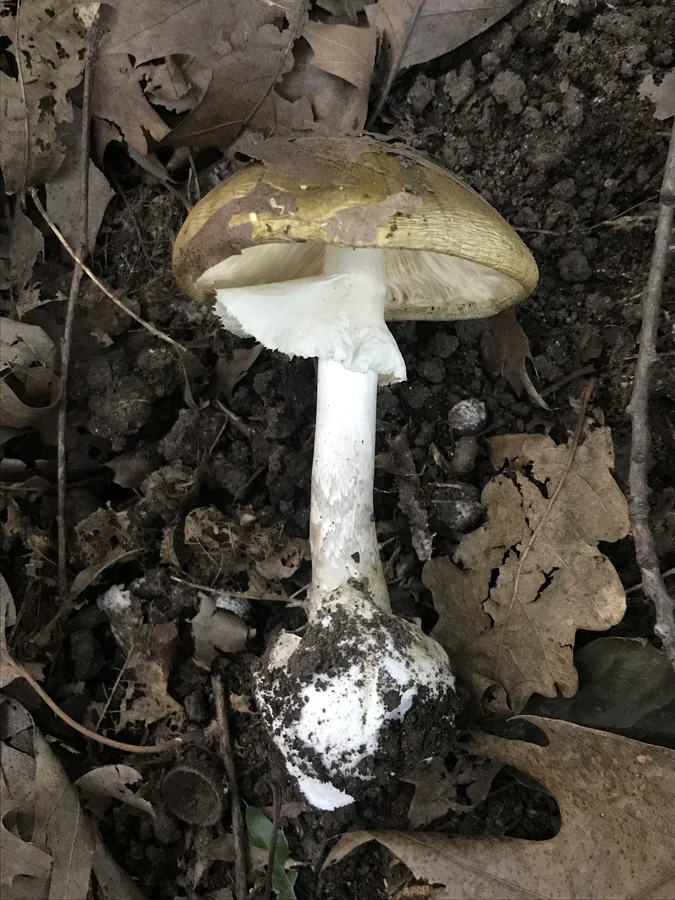
Death cap
Amanita phalloides · 毒鹅膏
Occasional鹅膏科☠️ Deadly Poisonous
Reference sources describe this as highly toxic, with recorded fatalities.
The same species can be described differently across regions and stages of maturity, and countless look-alike species cannot be told apart by eye. Never use the information on this page to judge whether a real mushroom is safe to eat.
How to Tell
- Stem base has a white cup-shaped volva, often buried under leaf litter
- Cap yellow-green to olive, faintly glossy when wet; margin not striate
- Gills remain white; upper stem has a white membranous ring
ID notes are compiled by AI from public sources, not reviewed by a mycologist, for learning only — never a basis for foraging.
Basics
- Family
- 鹅膏科
- Hymenium
- Gills
- Grows On
- Mycorrhizal
- How Big
- 5–15 cm (cap diameter)
- Encounter Rate
- Occasional
- Habitat
- Ectomycorrhizal under oak and other hardwoods
Easily Confused With
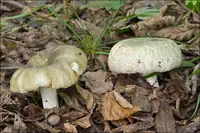 Green-cracking russulaGreen-cracking russula has no ring or volva, and its brittle stem snaps cleanly.
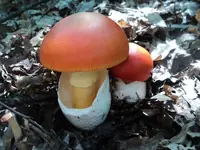 Caesar's mushroomCaesar's mushroom has an orange-red cap with yellow gills and stem; death cap has an olive-green cap and white gills.
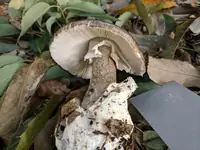 East Asian death capCap dark gray to grayish brown, with radiating dark fibrils
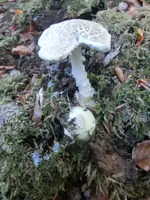 False death capCap pale lemon-yellow to nearly white, often patched with white veil remnants
Fun Fact
It accounts for more mushroom poisoning deaths worldwide than any other species. Its amatoxins survive cooking unchanged, and victims often go through a deceptive 1-2 day period of feeling better before symptoms return — a delay that can cost precious time before help is sought.
More in this family
- American Caesar
- Destroying angel
- East Asian yellow death cap
- Fly agaric
- Grisette
- Half-dyed slender caesar
- Panther cap
- Smith's amanita
- The blusher